
The Next Airport Expansion Won’t Be Concrete - It’ll Be Code
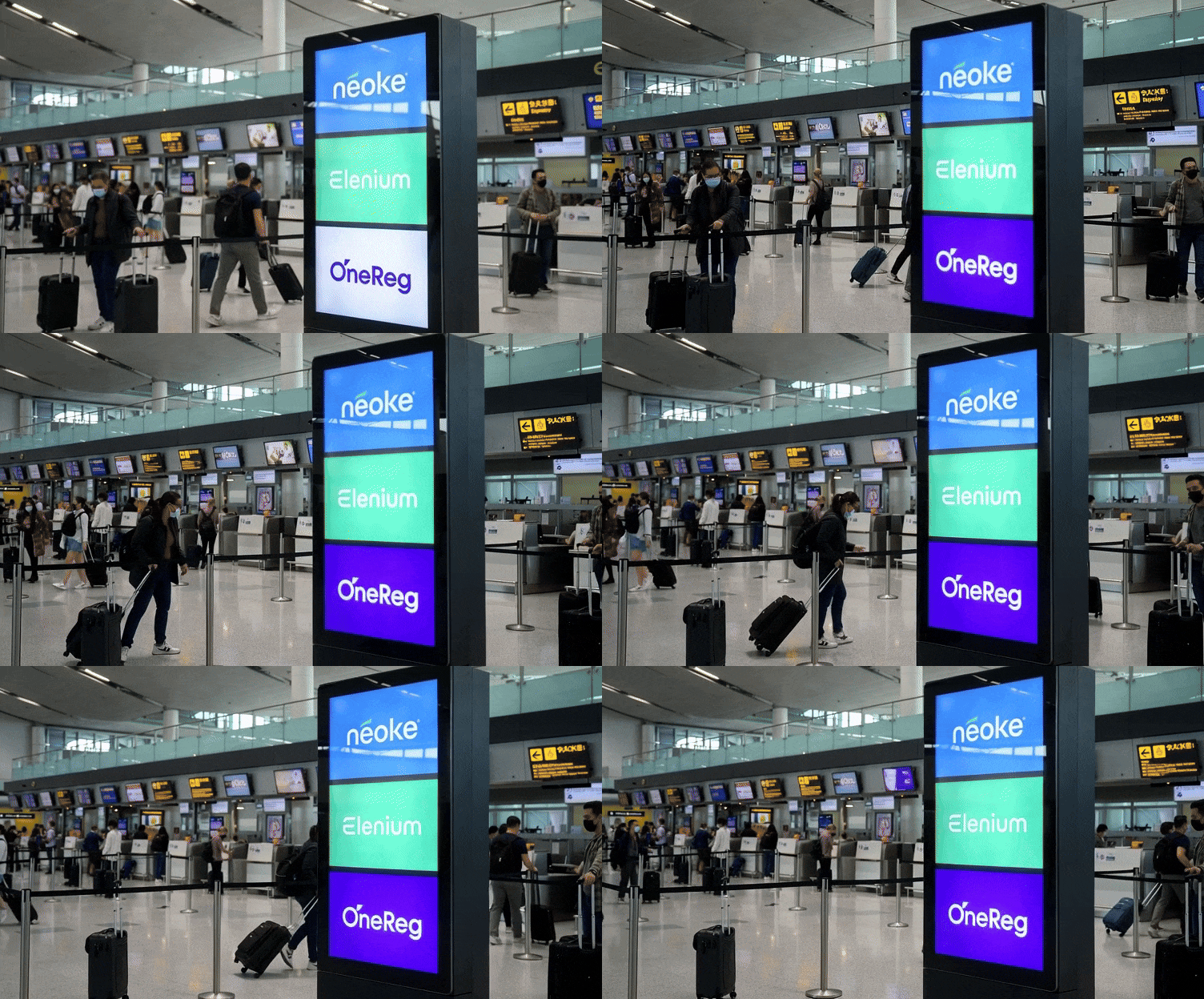
The aviation industry is facing a stark reality: we cannot simply build our way out of overcrowding. With global passenger numbers expected to double by 2040, the traditional solution of pouring more concrete is no longer viable. As terminals reach their physical limits, the industry's true bottlenecks have shifted from runways and gates to the invisible, aging systems that manage identity, compliance, and baggage. A new wave of technology leaders, including Elenium, Neoke, and OneReg, is proving that the next great capacity upgrade won't be made of steel, but of software designed to move faster than physical infrastructure ever could.
The cost of standing still is becoming a liability for operators and a frustration for travelers. While airports may look modern on the surface, core processes like baggage handling remain trapped in the past—only 5% of the 4.5 billion bags moved annually are processed through automated systems. From Elenium’s hardware-agnostic automation that slashes airline costs to Neoke’s decentralized digital IDs that eliminate "honeypots" for hackers, these innovators are replacing institutional memory and paper trails with scalable digital twins. They are turning the "hidden risks" of manual compliance and terminal congestion into defensible, infrastructure-like revenue streams.
Understanding how these technologies integrate to solve the industry’s 40-year renewal cycle is essential for any stakeholder in the travel ecosystem. Our full report dives deep into the specific business cases of these three startups, exploring how they are helping airports reach the 80% self-service target by 2030 while navigating the complex intersection of security and efficiency. To get the complete analysis of how software is redefining airport capacity, download the full PDF version of the article below.